We Hired Great People Who Happened to Be Engineers. And AI Just Proved Why
Early in my consulting career, I joined a boutique consulting firm (since to be acquired) that had a hiring mantra that I am proud to say, i also helped shape which I'll never forget:
"We hire great people, who happen to be amazing engineers."
This was the Culture.
At the time, I thought it was a nice slogan. 7 years later, I realise it was a great differentiator, and now to be seen as a cultural survival strategy -- one that matters more now than ever.
That phrase bred something specific: high-trust teams with a can-do culture. Teams that could walk into any client, any problem, any technology -- and figure it out. Not because they'd been trained on the specific stack (and yes, they totally were badass SMEs). But also because they brought curiosity, accountability, and the confidence to say "This is what good looks like, and if need to adapt, then we pivot, optimise and adapt we will." And The immediate Deliver Squads, The Company had their back, to go forth - Lead (sometimes into unknown) and make it happen.
Take this piece that aged reasonably well. The evolving nature of the DevOps Role all those year back, resonates today as much as then. This was a take on aptitude for First Principles Thinking, honing Learning Culture and practiced Innovation, coupled with a positive attitude.
Think platform engineering SRE, Kubernetes The hard way era. Systems Thinking, Terraform and 'bleeding edge' leanOps, to win over Enterprises and Deliver Digital Transformation - often at scale at organisations who didn't think it could have been possible. Those were the days.
Those teams commanded premium rates. And they justified every penny.
Exponential Stack. Same People. Same Processes.
Last week, Po-Shen Loh a Carnegie Mellon mathematician and social entrepreneur -- presented a talk that crystallised something I've been talking about and thinking about for months.
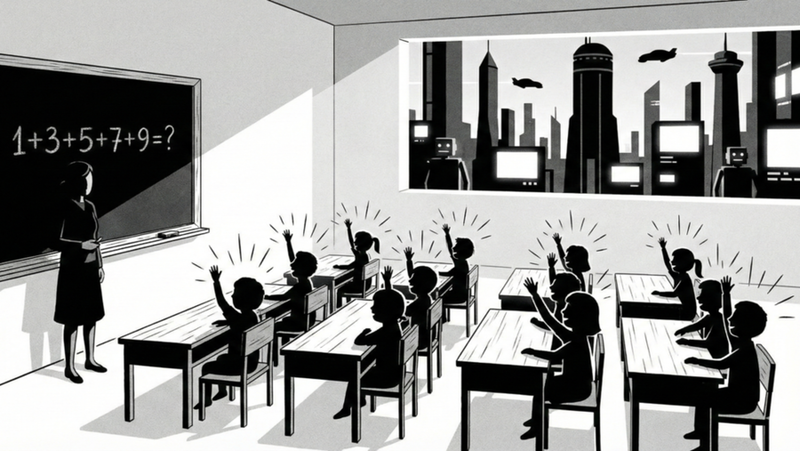
He told a story about visiting a fourth-grade classroom in rural South Carolina. High poverty. No phones. No internet access. He wrote a math problem on the board and before he finished writing, the kids were shouting the answer.
The kids without devices -- the ones who "figured out how to make their own games" -- outperformed every connected, well-resourced classroom he'd visited.
His takeaway wasn't about poverty or access. It was about what happens when curiosity isn't crowded out by optimisation. Then he said something that was poignant
> "I don't want to hire someone who has been trained to do one particular task, because now I've discovered -- wait one or two more years, I can use the AI to do that task and it'll be way cheaper."
> "Generally speaking, when I hire people, if I meet someone like that, I just try to think: can I just find a place for you in my organization? Great intention and great learning capacity. They're going to work hard towards a goal that's meaningful. This kind of person, you can plug into anything."
This is the hiring thesis for the agentic era. Not "what can you do?" but "can I count on you to figure it out?"
The Credential Trap: Training Human Versions of AI
Here's where it gets uncomfortable.
This too was a throwback to this piece The Not-So-Easy Guide on How to grow and develop an Amazing A-Team - which begs to get AI sprinkles, yet stands true focussing on cultivating great A-Teams based on Good Comms + Trust + The Why(Driver, Motivator), which is unsurprisingly the new (or the same) startup model of high performing teams, which are Lean & Mean Machines as The New Model of AI Powered Team that happen to scale.
Loh visited a school in China where they'd built an AI-powered app to help students ace standardised exams. Rank higher, get better university placement, get a better job. His take was not so impressed...
"I think that's just creating people who are human versions of AI. You're just making human robots."
He's right. And enterprises are doing the same thing.
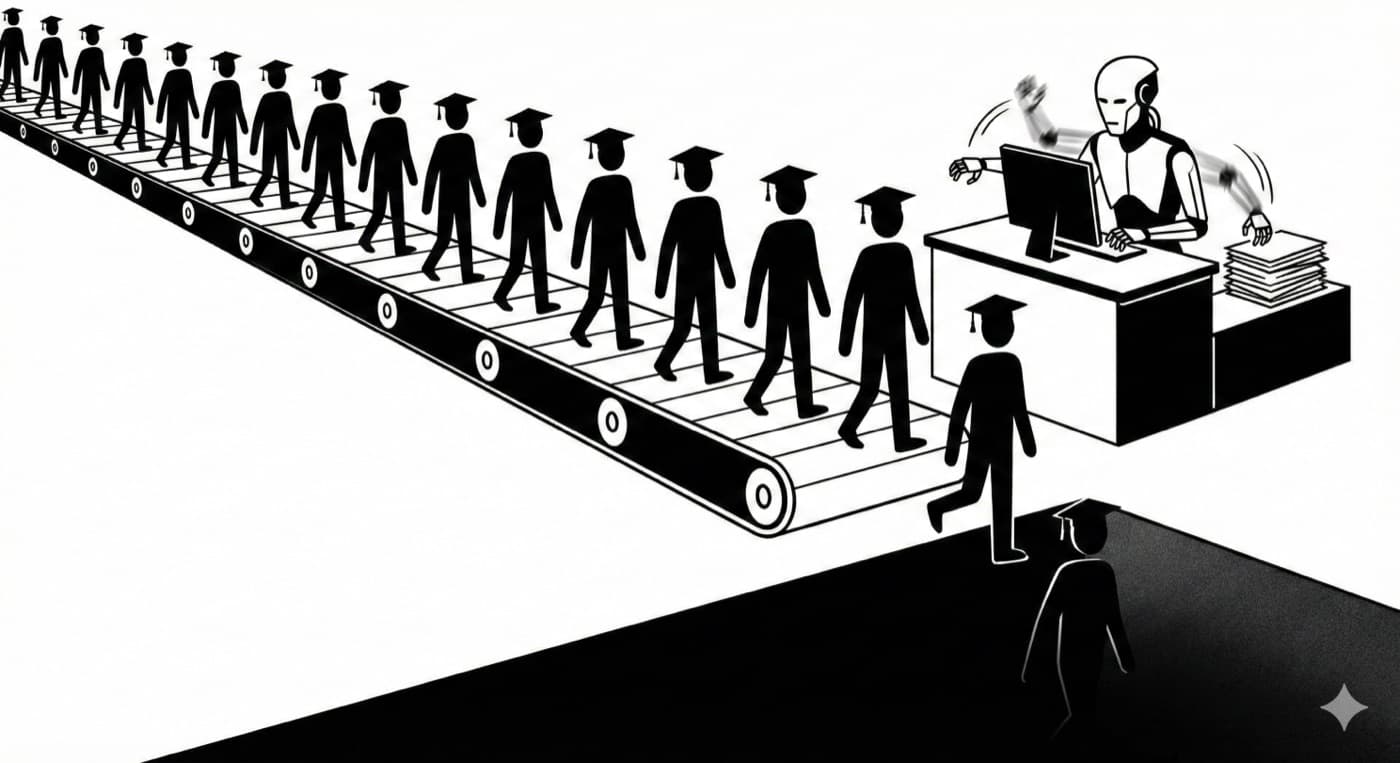
Think about how most organisations hire today. Credential gates. Certification requirements. Skills-matrix matching. Standardised interviews optimized for pattern recognition.
Sure, helpful baseline. Yet I cant help to think that we've built hiring pipelines that select for exactly the skills AI already has.
Traditional schooling and professional training -- exams, certifications, compliance courses -- are conforming for a baseline that's rapidly being commoditised. In some ways, we're optimising legacy. Building templates for a world that AI is already disrupting.
The organisations that will win aren't optimising for yesterday's skill taxonomy. They're hiring for first principles thinking, communication, problem-solving, and the ability to form their own opinions.
And this DevOps role title which I opened with, all those years ago? Well, this morphed role title is blending into the 'Applied AI Engineering' Role. Thats my take, I'm sticking to it.
The Real Skills for the Next Generation
This is where I'll offer a personal view that might be unpopular:
The most important skills for the next generation aren't necessary 110% technical. After all, I don't want to hire more Human-Bots. Similarly, technical focus is not what I'm telling my daughters to excel at school it. (each to their own) They're:
- Communication and articulation - because AI can generate text but can't persuade a skeptical stakeholder. We (still) work with people, for people.
- Languages - because access to global opportunity networks (exactly Loh's point) requires fluency, nuances, understanding, and knowledge across multiple sources.
- History and context - because understanding why systems are built the way they are matters more than knowing how to rebuild them.
- Focus - because in an age of infinite AI-generated noise, sustained attention is the scarcest resource. After all this is converging on a human attention economy. tread carefully.
- First principles reasoning - because "the AI told me to" is the new "the consultant recommended it," and it's equally unacceptable.
Bring a positive attitude and aptitude to learn, and that's a recipe for any organisation. AI-hybrid or not. Remote or not.
The Truth About Using AI Wrong
Here's what keeps me up at night: we're already seeing people use AI the wrong way.
Not wrong as in "inefficient." Wrong as in having AI tell you what to do, and you not knowing why.
When you outsource judgment to a system you can't interrogate, you don't become more productive. You become more dependent. And dependency without understanding is fragility disguised as efficiency.
Someone told me recently - kinda topical here. "You really shouldn't use AI to generate blog posts." My first reaction was: of course not. Not ins a complete form at least, because AI doesn't know MY story. But it did get me thinking about this deeper.
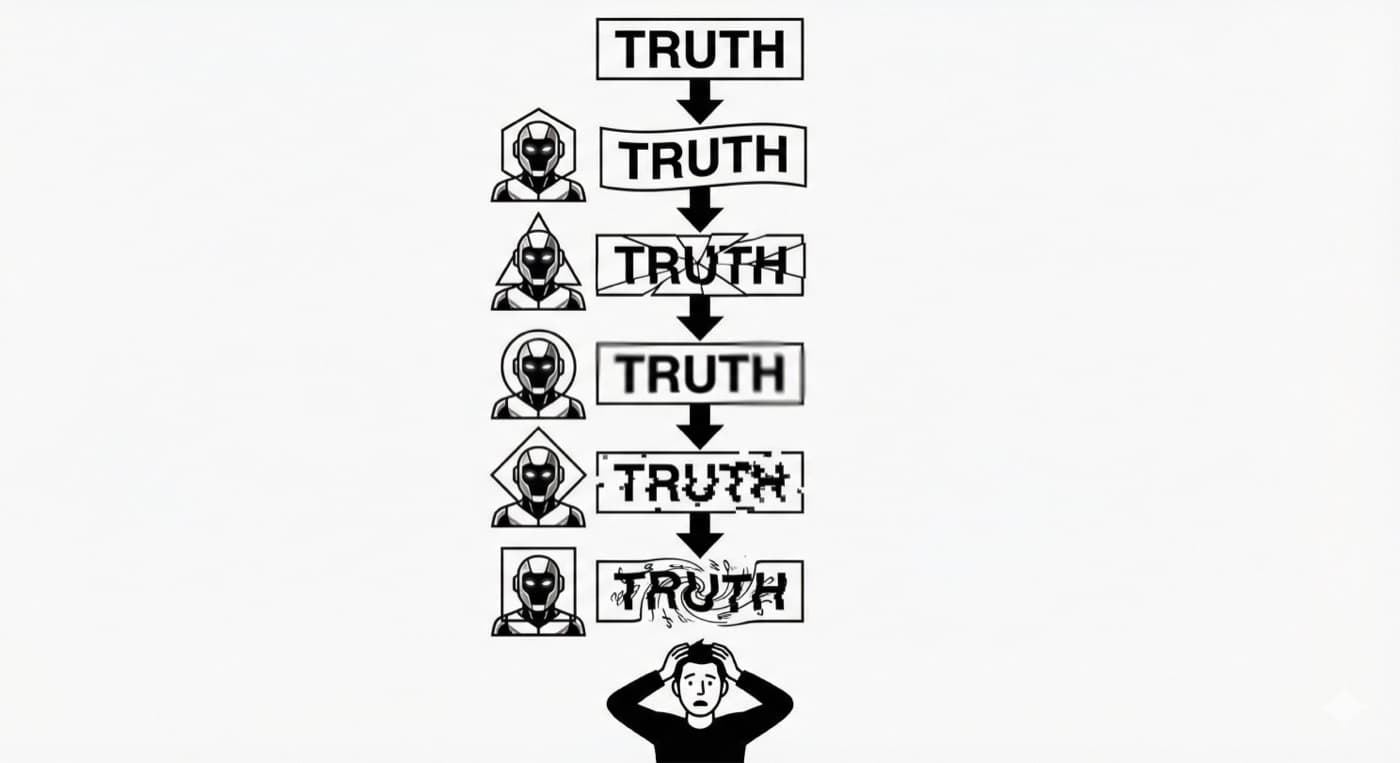
There will come a time - maybe it's already here - when content is generated by AI agents, consumed by other AI agents, and then distilled by yet more agents before reaching a human. A chain of machine interpretation, each link applying its own priorities, its own filters, its own biases. (Take ChatGPT woke responses screenshots repeatedly shared on X as an example)
It's not just "lost in translation" we should worry about. It's lost in AI priorities, governance, and politics. Every agent in that chain has a system prompt. Every system prompt encodes someone's values. The human at the end of the chain receives a view of reality shaped by cumulative decisions they never made and can't inspect.
That's the real Black Mirror episode. And it's not science fiction -- it's the multi-agent architecture challenge that enterprises are building right now without fully grappling with.
From Engineer to Technical Manager
The best engineers I know aren't writing more code. They're orchestrating agent workflows. They're designing supervision patterns. They're deciding which decisions to delegate and which to keep human. For now, These SMEs - Subject Matter Experts - Know what good looks like.
New Tools, Same SMEs deriving the maximum value returns for their value use cases.
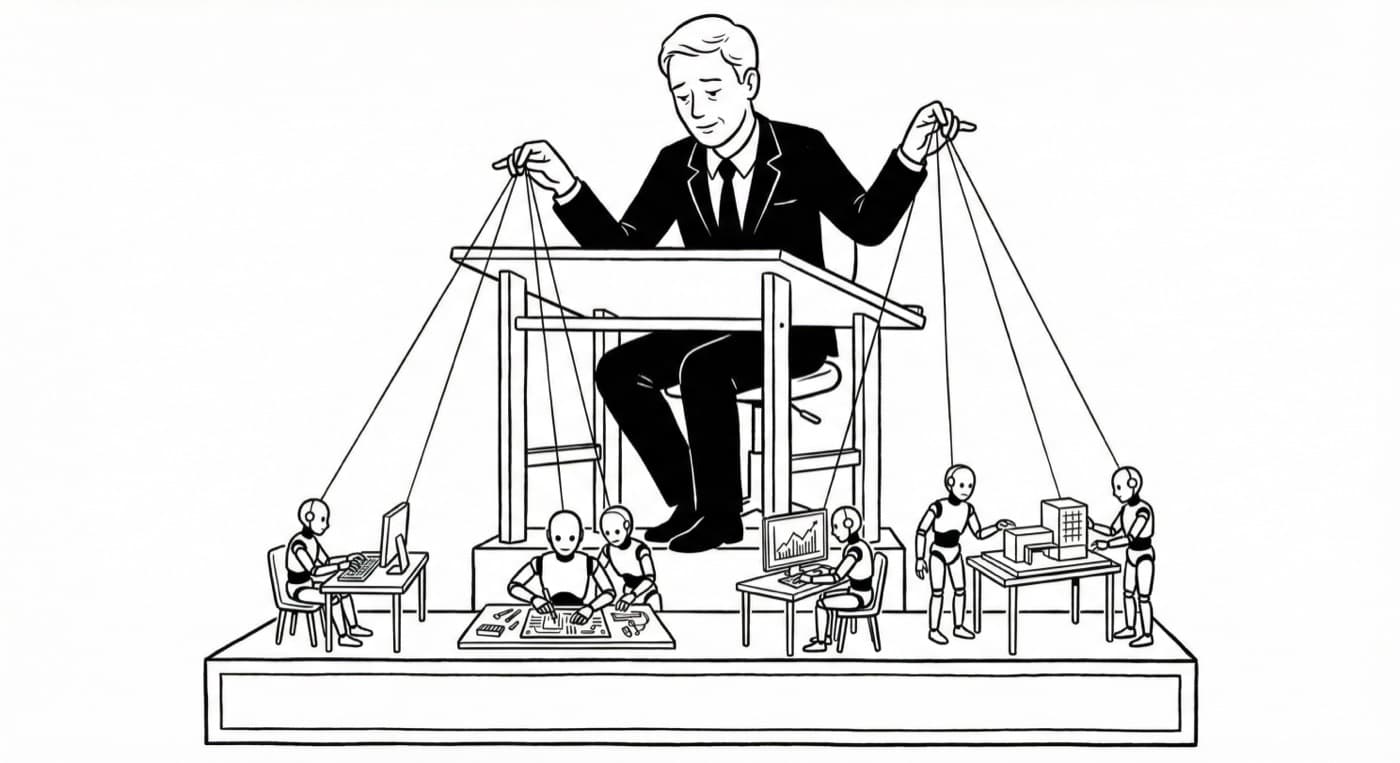
The consulting model I grew up with - "great people who happen to be engineers" - was always about this. It was never about the specific technology. It was about judgment, adaptability, and the trust your team earned by caring about the outcome more than the tools.
The only difference now is that the tools are autonomous. Tools make decisions. Tools take actions. They chain together in ways that compound both value and risk.
That makes the human qualities - The intention, curiosity, trustworthiness and Accountability - not just nice-to-have. They're the only thing that can't be commoditised.
The Future Proof Hiring Filter
Twenty years of building and leading engineering teams, and I've arrived at the same place a Carnegie Mellon mathematician did from a completely different direction:
Hire for intention and learning capacity. Everything else is trainable or automatable...
The teams that justified premium rates in consulting still do. The people who brought can-do culture and high trust still deliver outsized outcomes. The difference is that now, their "Team" includes AI agents.
Building hybrid teams - humans and agents working together - it doesn't change the fundamental requirement. It amplifies it. The higher the automation, the more critical the humans watching over it become.
We are NOT entering an era where we need fewer great people. We're entering one where we need MORE of people - as we're on cusp of being outnumbered by the robot/AI workforce only a few years from now.
This is where the definition of "great" has less to do with a certification or a degree. It has everything to do with whether you can look someone in the eye and they know their conviction, purpose and intent - That this person will figure it out.
Jaroslav Pantsjoha is a Technical Director. Google Developer Expert in Applied AI, Google Cloud Champion Innovator, and an author. All content and opinions are his own.
Originally published on LinkedIn ↗. Republished here in full so it can be read without an account.
Jaroslav Pantsjoha
Technical Director · Agentic AI & Cloud Platforms · Google Developer Expert
Full bio →